
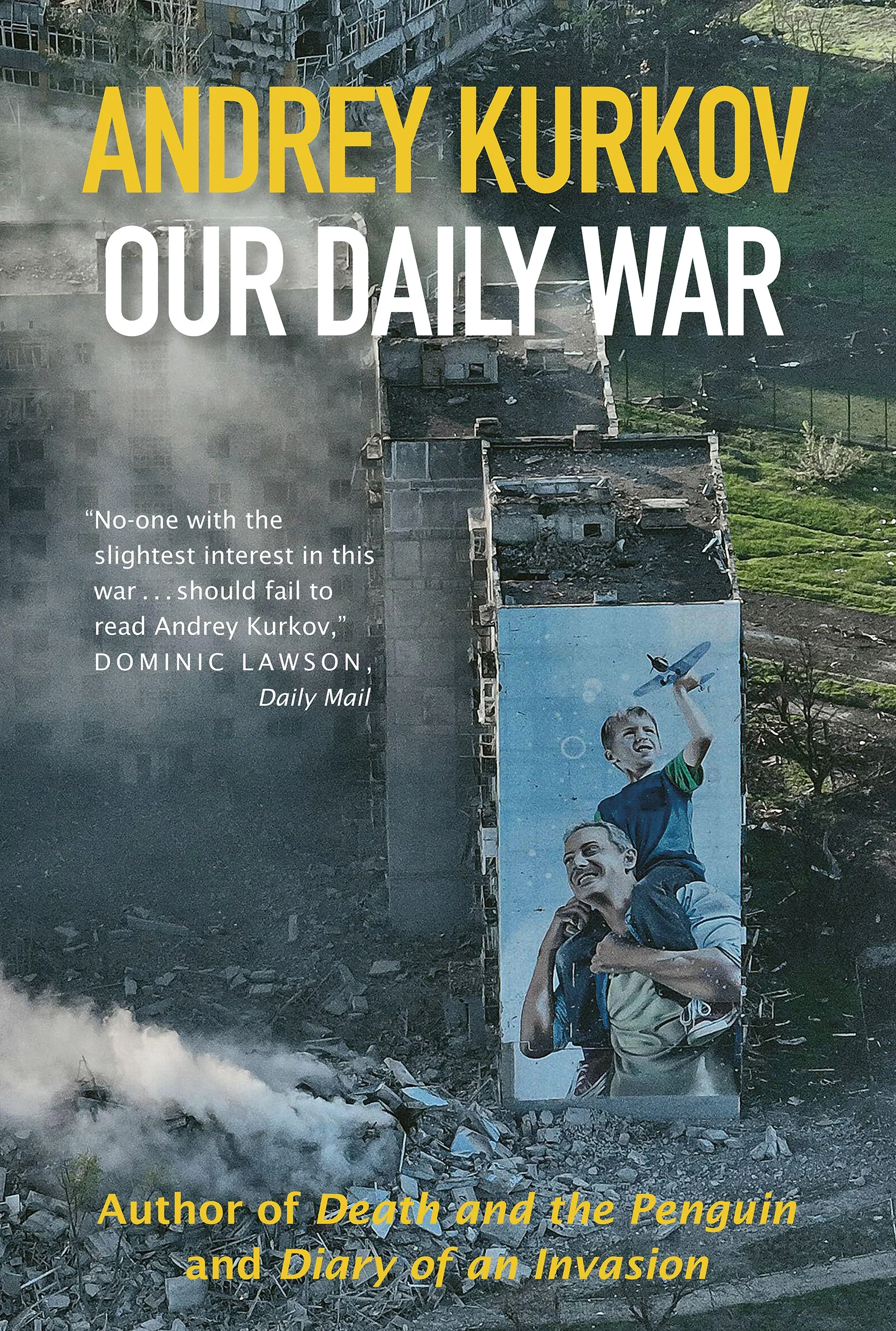
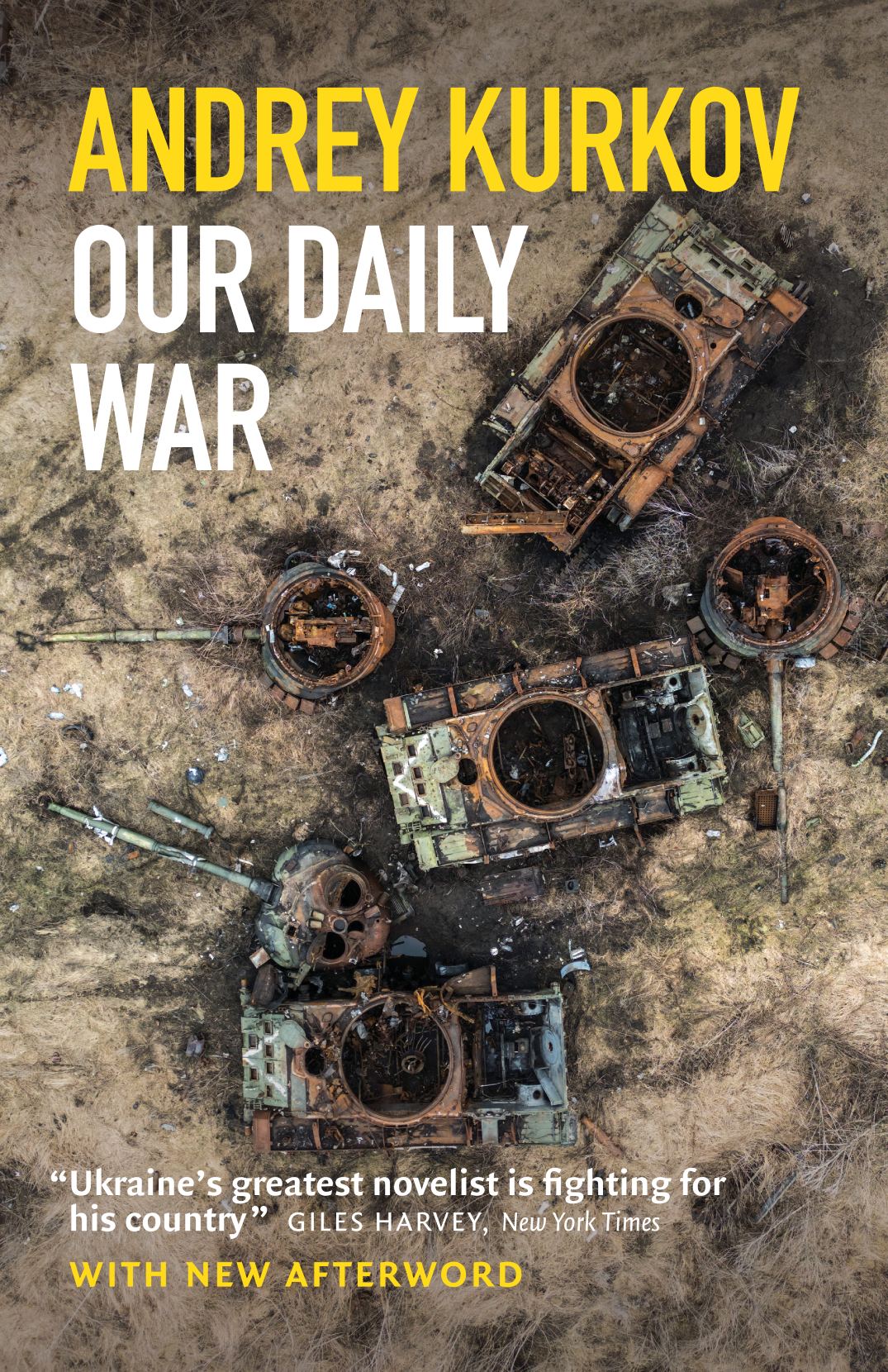
Our Daily War (hardback and paperback editions)
Andrey Kurkov
“The pieces are flawlessly structured; the tone is devoid of self-pity … Yet saturating the book is a note of savage black comedy, the farce of a world made weird by unimaginable violence”
Robin Ashenden, Spectator
The war goes on, and Andrey Kurkov’s acclaimed war diaries continue – a profound and very personal chronicle of life under siege.
In this second volume of the diaries, essays on the Russian invasion of his country, Ukraine’s greatest living writer bears witness to a nation enduring the unendurable. From his home in Kyiv, Kurkov captures the surreal and the life-shattering: children learning algebra in metro stations turned bomb shelters, holidaymakers sunbathing on mined beaches, and farmers working in fields filled with unexploded ordnance.
On its eastern borders, Ukrainian citizens are put into “filtration camps”, en route to Russia or to execution. To the north, Belarusian forces press refugees making for Poland into service as mine detectors.
This is a lived account – rich with startling vignettes, dark humour and devastating detail – of a country adapting, resisting, surviving. A child downloads movies to a smartphone to watch during nightly power cuts. An elderly Japanese man feeds the hungry in Kharkiv. A soldier carefully rehomes a swarm of bees. A winemaker uses scrap wooden shell crates to package gift sets. The family of a journalist killed in the Donbas sells their home to open a bookshop in his memory.
Our Daily War is Kurkov at his most intimate and insightful: a record of resilience, heartbreak and fierce national pride. Urgent, humane, unforgettable, this is history as it is happening, and as only Kurkov can write it.
Hardback: Demy, with map · 352pp · £18.99 · 978-1-916788-68-8 · 18.vii.2024
Paperback: B-format, with map and afterword · 352pp · £10.99 · 978-1-916788-78-7 · 24.viii.25
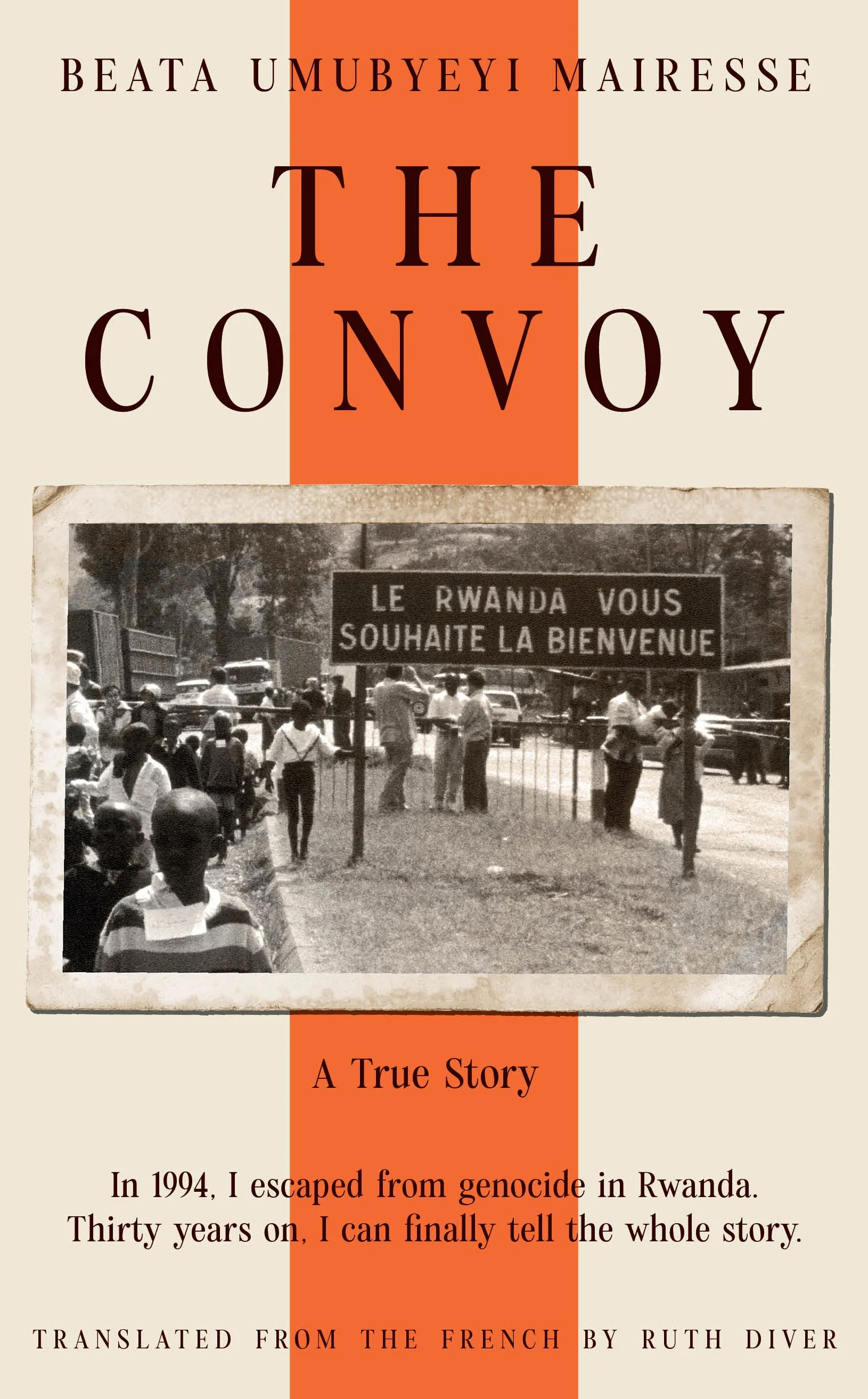
The Convoy
Beata Umubyeyi Mairesse
Translated from the French by Ruth Diver
Winner of the Grand Prix de l’Héroïne Madame Figaro, the Prix Montluc Résistance et Liberté (special jury prize) and the Prix France Télévisions
The author was fifteen at the height of the genocide inflicted on the Tutsi people in Rwanda. She and her mother had spent weeks moving from one insecure shelter to another amid scenes of petrifying violence. Hundreds of thousands of Tutsi were killed in a period of only three months.
The lives of Beata Umubyeyi Mairesse and her mother were a sleepless nightmare – until, through the bewildering courage of nuns and of aid workers, a place was eventually found for them on a convoy to safety. But even then, when their journey – hidden in the bottom of a truck – came at last to an end, safety was only assured by the presence of journalists and cameramen observing their arrival at the frontier.
More than a decade later, after rebuilding her life in France, Beata Umubyeyi Mairesse was ready to begin the process of reconstructing her incomplete memories of the escape and establishing community with other survivors. She is now a poet and a prize-winning novelist, but not before this has she written about her own history.
Beginning by making contact with the B.B.C. team which filmed the convoy, then by tracking down aid workers, journalists and fellow escapees and scouring archives in a search for photographs of her crossing of the border, the author pieces together records and personal accounts to try to comprehend the chaos that overtook Rwanda at the time of the genocide.
The Convoy reflects on the act of bearing witness and the value hidden in fragments of the past. Thirty years on from the genocide, Beata Umubyeyi Mairesse was able to find and listen to others who had left Rwanda on the same convoy, as well as many of the people who played a role in securing her safety: men and women of exceptional courage.
Demy hardback with map · 288pp · £18.99 · 978-1-916788-70-1 · 27.ii.25